 18+
18+
18+
18+
Learn how RTP and volatility shape every session — and how to use both numbers to play smarter at Tower Rush in 2026.
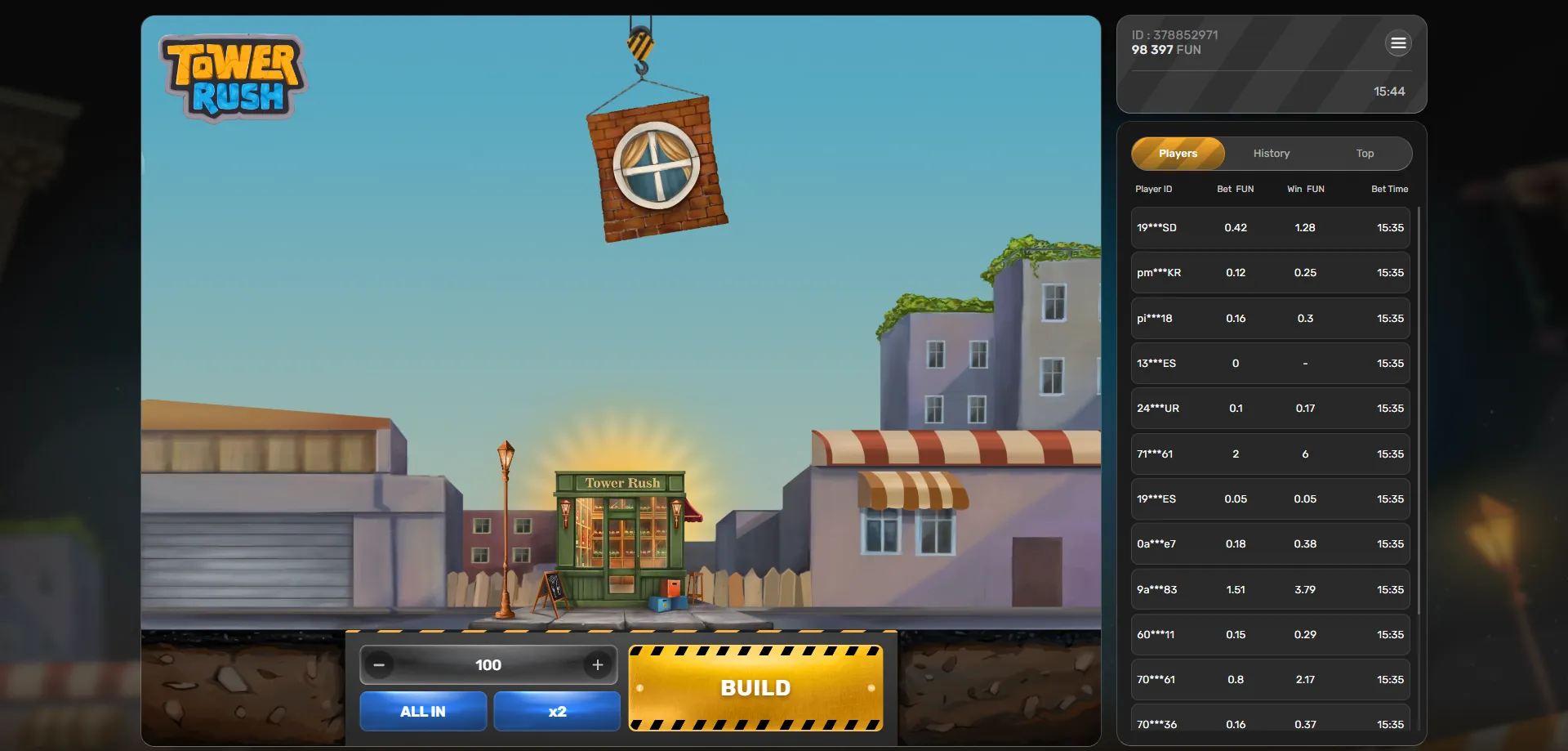
Tower Rush combines a competitive return-to-player figure, a high-volatility risk profile, and a mobile-friendly crash format — making it a title worth understanding before you place your first bet. Most players focus entirely on a game's theme or bonus features, but two numerical values — RTP and volatility — do more to determine your actual session outcome than any visual detail. Understanding them takes less than five minutes, and the payoff is a much clearer sense of which games belong in your rotation and which ones you should approach with caution.
RTP tells you how much a game returns over millions of rounds. Volatility tells you how it returns that amount — in frequent small wins, rare large ones, or somewhere between. Used together, they form a simple filter that cuts through marketing copy and tells you what a game actually feels like to play over a real session. Tower Rush, with its published ~97% RTP and high-volatility crash mechanics, is a clear example of why both numbers matter equally.
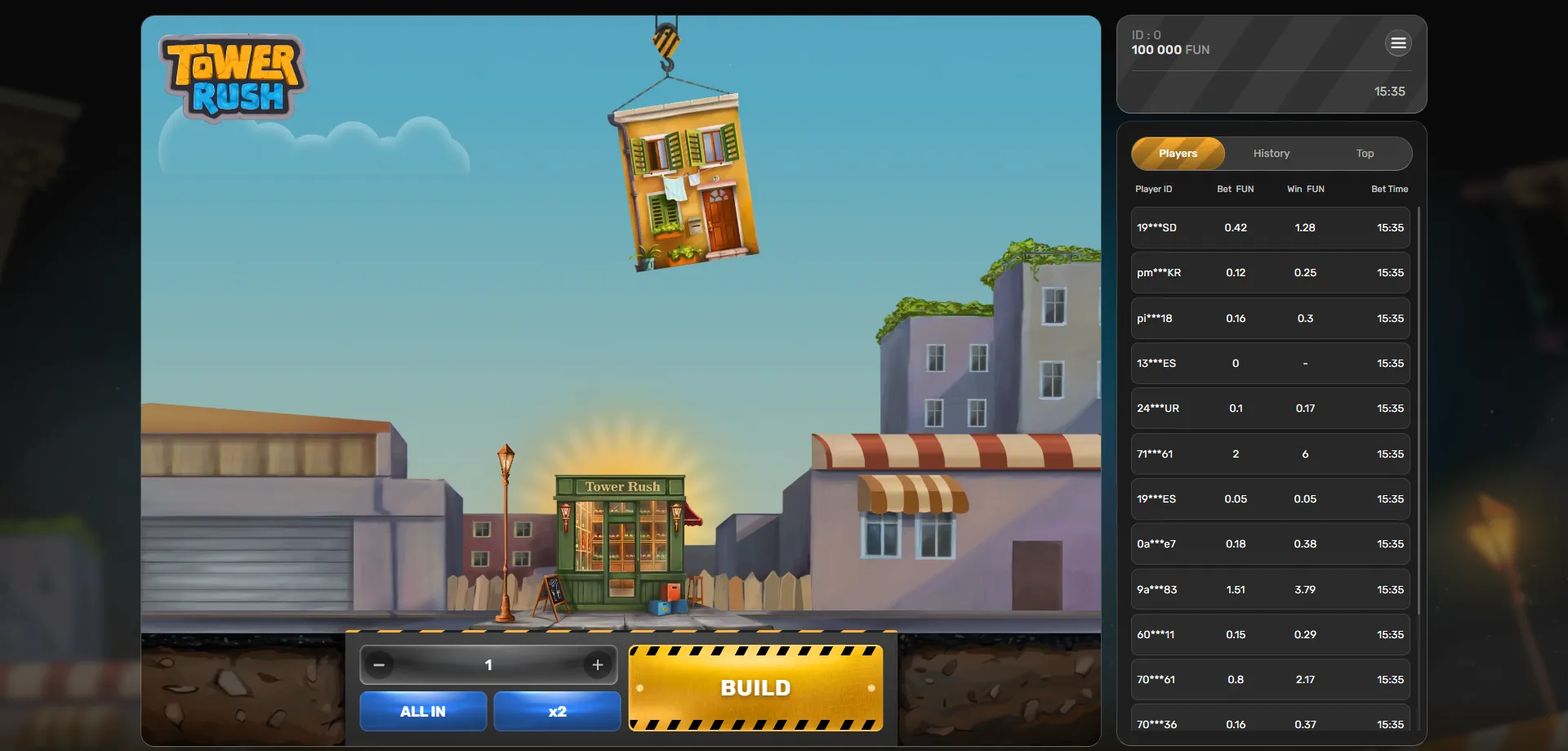
Return-to-player is a long-term statistical percentage expressing how much of all money wagered on a game is paid back to players over an extended period. Tower Rush carries an RTP of approximately 97%, which means that for every ₹100 collectively wagered across millions of rounds, the game is designed to return around ₹97 in winnings. The remaining 3% represents the house edge. This is a highly competitive figure — most standard video slots sit between 94% and 96%, so Tower Rush's RTP positions it favourably in that comparison.
The figure is certified by the game's developer, Galaxsys, whose provably fair system allows players to independently verify the randomness of each round's outcome. Operators who licence the game may configure the RTP within a permitted range, which is why you may occasionally see a slightly different figure listed at a specific casino. Always check the game's information panel at the platform you are actually using rather than relying solely on the developer's headline number.
The published 97% is a theoretical figure derived from mathematical modelling across an enormous sample of rounds — often in the billions. Your personal experience over a single session of, say, 50 rounds will almost certainly deviate from this number significantly in either direction. A player who hits a 20× cash-out early in a session might see a personal RTP of 300% for that hour. Another player who faces several early crashes might sit at 40%. Neither experience contradicts the theoretical figure; it simply reflects the natural variance built into the game's design.
The law of large numbers is the statistical engine behind RTP. The percentage only becomes meaningful at sample sizes in the millions, which no individual player will ever reach in a single session. In practical terms, this means you should treat RTP as a comparative tool — a way to identify which games return more to players over time — rather than as a prediction for tonight's session. A game with a 97% RTP will outperform a 92% RTP title over millions of rounds, but over 100 rounds the difference is statistically invisible. Use RTP to filter out poor-value titles; use volatility to understand what your actual session will feel like.
Volatility — sometimes called variance — describes the distribution pattern of a game's payouts. A low-volatility game pays out frequently but in smaller amounts, keeping your balance relatively stable. A high-volatility game like Tower Rush pays out less frequently but offers the potential for significantly larger individual wins. The game's crash mechanics amplify this dynamic: every round either ends with a successful cash-out multiplied by your stake, or with a total loss of that round's bet if the tower collapses before you exit.
High volatility has a direct and measurable impact on how much capital you need to sustain a session. Because Tower Rush can produce multiple consecutive losing rounds before delivering a large return, your bankroll must be sized to absorb those losses without forcing you to stop before the positive variance arrives. A practical rule used by experienced players is to limit each individual round's stake to between 1% and 3% of your total session budget. At ₹10 per round, a ₹500 session budget gives you 50 rounds — enough to weather a rough patch if you are targeting modest multipliers in the 1.5× to 2× range.
Low-volatility alternatives suit players who want extended play with lower risk of ruin. If your goal is to enjoy a longer gaming session rather than chase a specific large win, a low-volatility title will keep your balance in motion longer for the same initial deposit.
Tower Rush makes its volatility profile transparent by design. The crash format means every round carries a binary outcome — you cash out successfully or you lose the stake — and the multiplier can theoretically rise to very high values before collapsing. This is a clear structural signal of high volatility: the game is built around infrequent but potentially large outcomes. For traditional slot games, visual indicators include the number of paylines (fewer often means higher volatility), the size of the jackpot relative to the base game (larger jackpot relative to typical wins signals high variance), and the bonus frequency listed in the paytable. Always check the game's information page before playing, where certified RTP and volatility band are usually disclosed by the developer.
RTP and volatility are most useful when considered together rather than in isolation. A game with a 98% RTP but extreme volatility may drain your bankroll faster than a 95% RTP title with low variance, simply because the high-variance game produces long loss streaks before paying out. The following framework helps you match the right combination to your actual playing goals.
If your priority is maximising time at the table rather than chasing a life-changing win, look for games that pair a high RTP (96% or above) with low to medium volatility. These titles produce regular small returns that replenish your balance steadily, allowing you to play for longer on a fixed budget. Classic three-reel slots, certain table game variants, and low-variance video slots serve this purpose well. The trade-off is that the ceiling on any single win is modest — you are trading excitement for stability.
Tower Rush itself fits a different profile: high RTP combined with high volatility. This pairing is suited to players who are comfortable accepting frequent small losses in exchange for the possibility of hitting a significant multiplier. The 97% RTP ensures the game is not tilted excessively against the player over the long run, but the high volatility means individual sessions can swing sharply. This is the correct profile for players with a specific target multiplier in mind and the bankroll discipline to reach it without chasing losses.
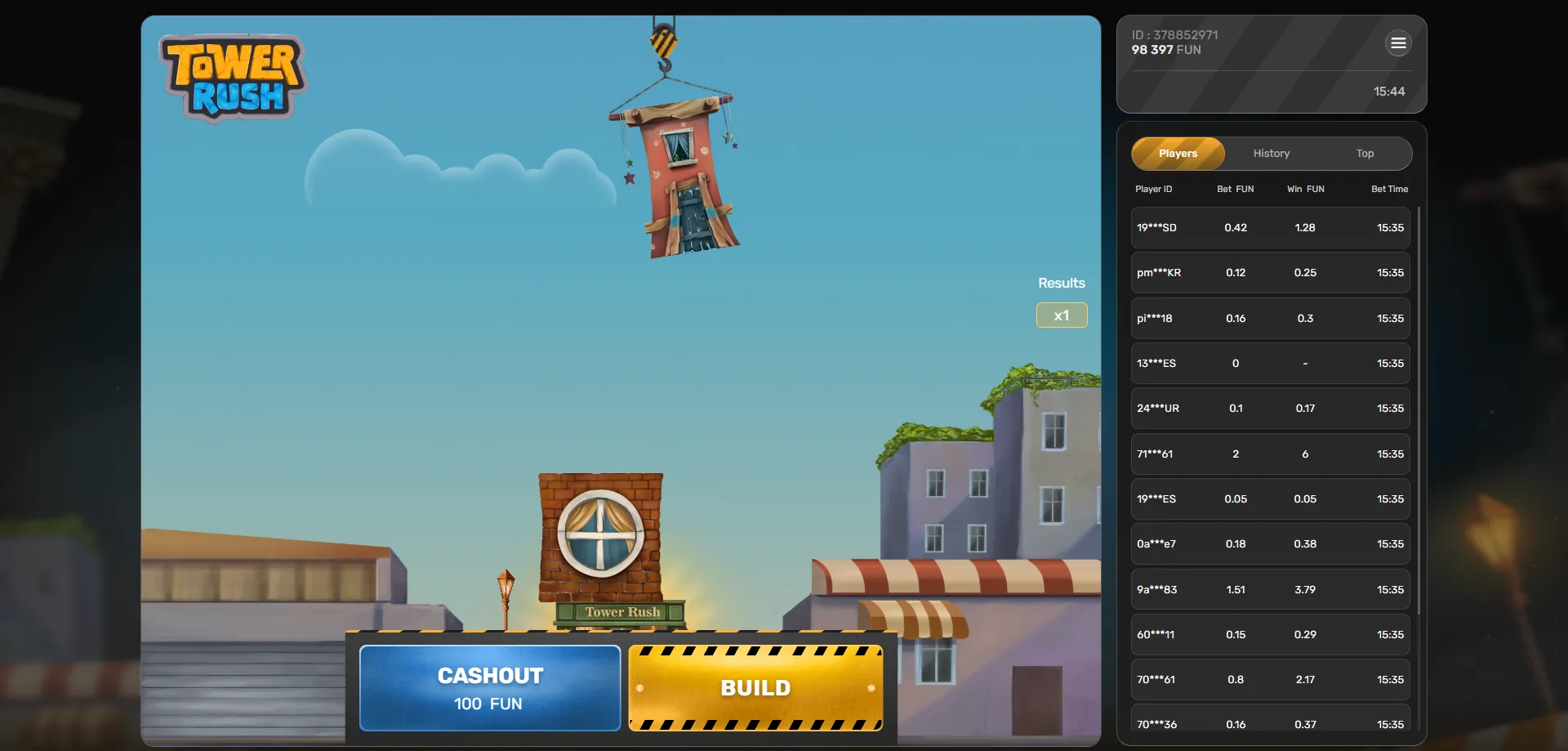
Tower Rush, developed by Galaxsys, is the centrepiece title combining a ~97% RTP with high volatility and crash mechanics. The table below summarises its core parameters alongside the key features that define its risk-return profile.
| Parameter | Tower Rush |
|---|---|
| RTP | ~97% (operator-variable) |
| Volatility | High |
| Game Type | Crash / Multiplier |
| Provider | Galaxsys |
| Min Bet | ₹10–₹50 (platform-dependent) |
| Max Payout | Very high (50× referenced in teasers) |
| Provably Fair | Yes |
| Demo Mode | Yes |
For players looking to compare Tower Rush against other options in the same Galaxsys catalogue, the principle is consistent: crash-format games from this developer tend to carry competitive RTPs and high-volatility profiles, making them better suited to players who manage their bankrolls actively rather than those who prefer passive, low-risk entertainment.
One of the most consistently overlooked factors in real-money play is the effect of casino bonuses on the effective RTP of a game. When you play with bonus funds, your actual return is not simply the game's published 97% — it is that figure modified by the bonus's wagering requirement, the restricted game list, and any maximum win caps tied to the promotion.
A welcome bonus with a 35× wagering requirement means you must bet the equivalent of 35 times your bonus amount before any winnings become withdrawable. If the bonus is ₹1,000 and the requirement is 35×, you must wager ₹35,000 in qualifying rounds. Playing a 97% RTP game through this requirement, you can expect to retain approximately 97% of each wager statistically — but over ₹35,000 of wagering, the expected loss is ₹35,000 × 3% = ₹1,050. This means the bonus effectively costs you more than its face value if Tower Rush is permitted in the wagering calculation at full contribution.
Some game developers configure a separate, lower RTP for rounds played with bonus funds. This practice is legal and disclosed in the game's technical documentation, but it is rarely highlighted in the casino's bonus terms. Galaxsys uses a provably fair system that allows players to audit individual round outcomes, which offers more transparency than most slot developers provide. If a casino is running Tower Rush with a modified RTP under bonus conditions, this should be discoverable through the game's information panel at that specific platform. The practical takeaway: bonus funds are not equivalent to cash at face value. The advertised RTP applies to real-money play; always read the bonus terms before accepting any offer.
Verifying the RTP of Tower Rush at a specific casino is more straightforward than with traditional slot machines, thanks to Galaxsys's provably fair architecture. Before placing a real-money bet, use these three approaches to confirm you are playing the correct version of the game.
These tools are particularly valuable for Indian players who may be accessing Tower Rush through offshore platforms where regulatory oversight is less stringent than in fully licensed European markets.
Understanding RTP and volatility in theory is straightforward. Applying them correctly in practice is where most players go wrong. The following errors are the most frequently observed, and each one has a direct cost.
If you want to go beyond the numbers, the site offers several resources to deepen your understanding. The Tower Rush Rules guide explains exactly how the crash mechanic works, including how bonus floors are triggered and what the provably fair system verifies. For players ready to apply what they have learned, the Tower Rush Strategy and Tips page covers bankroll management frameworks, auto cash-out settings, and multiplier targeting. And if you want a broader assessment of the platform before depositing, the Tower Rush Review evaluates licensing, payment methods, mobile performance, and overall trustworthiness in one place.
Applying everything above does not need to be complicated. Use the following four-step process each time you open a new title, and you will consistently make better-informed choices than the majority of players.
Tower Rush scores well on the first two steps — its 97% RTP is transparent and verifiable, and its high-volatility crash format is honestly represented in the game's design. The remaining two steps are entirely within your control, and applying them consistently is what separates disciplined players from those who rely on luck alone.
Register through cm2inch.com today to secure a matched deposit bonus and 50 free spins on the hottest slot games.
Play Now🔒 18+ · T&C Apply · Play Responsibly