 18+
18+
18+
18+
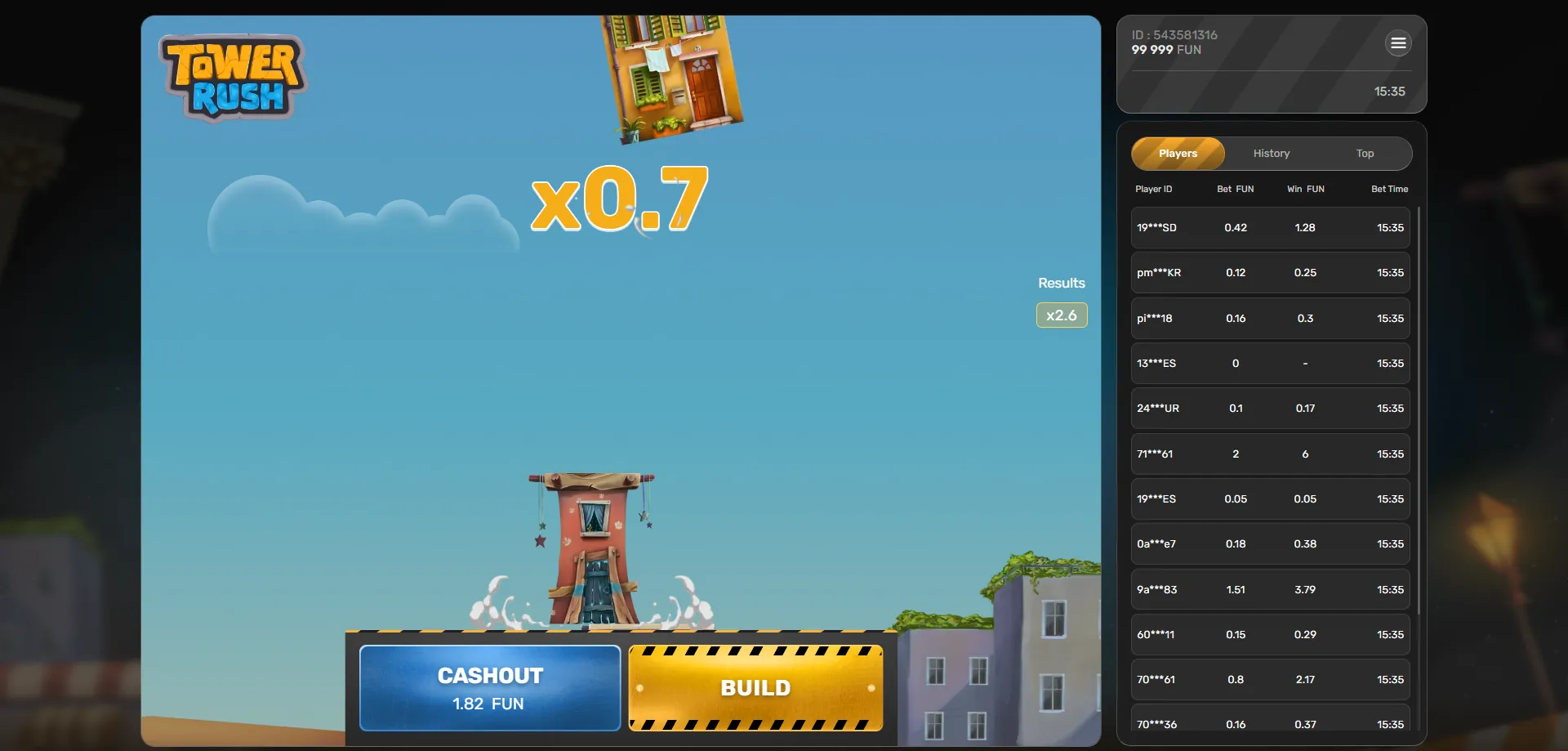
Tower Rush combines a high ~97% RTP, provably fair mechanics, and fast-paced crash gameplay — here is the complete strategic picture for players in India. Developed by Galaxsys, the game tasks you with cashing out a rising multiplier before the virtual tower collapses. Unlike traditional slots, there are no reels, paylines, or scatter bonuses. Every round is an independent event, and your sole decision is when to cash out. That single decision is where strategy lives.
Understanding the fundamentals before placing real rupees is essential. Tower Rush uses a certified random number generator (RNG) to predetermine each round's crash point before bets are placed, confirmed by its provably fair system. This means no pattern exists to exploit — the tower could collapse at 1.01× or climb past 20×, and neither outcome is more or less likely based on recent history. Strategy, therefore, is not about predicting the crash point. It is about managing your stake, your expectations, and your session behaviour so that variance works with you rather than against you.
The game's high volatility profile is the most important fact to internalise before you develop any Tower Rush strategy. High volatility means that winning rounds can be infrequent but rewarding, while losing streaks can arrive suddenly and deplete a poorly managed bankroll very quickly. Indian players who approach Tower Rush with a clear plan — fixed stake sizes, defined cash-out targets, and hard stop-loss limits — will always outlast those who rely on instinct alone.
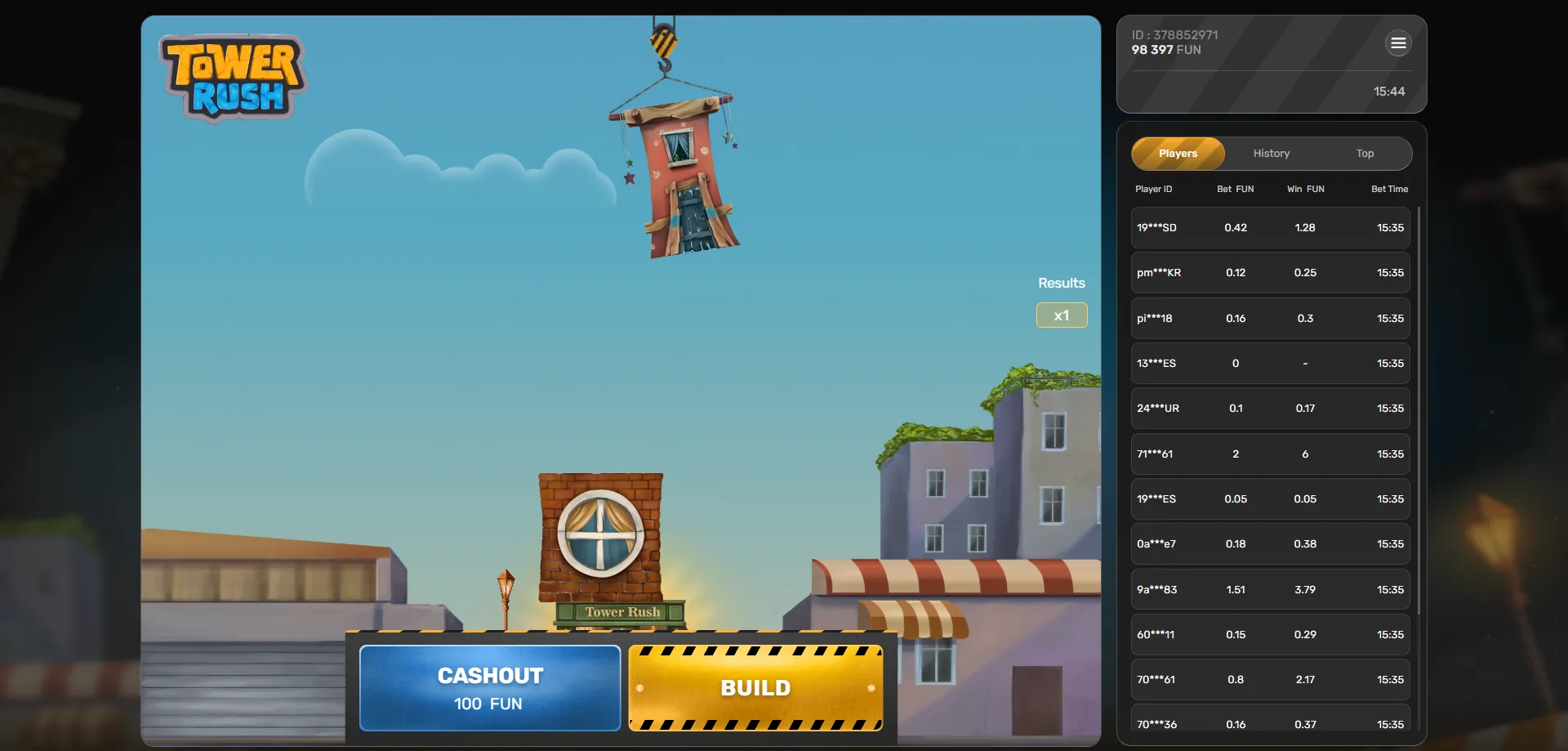
Bankroll management is the foundation of any sustainable Tower Rush game tricks approach. Before a single round begins, decide on three numbers: your total session budget, your stake per round, and your stop-loss limit. For Indian players funding accounts via UPI, Paytm, or card payments in INR, these numbers are easy to calculate with the game's minimum bet starting as low as ₹10–₹50 depending on the casino.
A widely recommended rule for high-volatility crash games is to limit each round's stake to 1%–3% of your total session budget. If you arrive with ₹1,000, that means betting between ₹10 and ₹30 per round. This approach means a losing streak of ten consecutive early crashes — entirely plausible given the game's volatility — will not wipe out your session. You preserve enough capital to continue playing and benefit from the statistical return built into the 97% RTP.
Your stop-loss limit should be set before you start, not during a losing run. A practical threshold for most players is 30%–40% of the session budget. If your ₹1,000 drops to ₹600–₹700, end the session. Chasing losses in a crash game accelerates the damage because rounds resolve in seconds, making it easy to place many large bets in a short time. Equally, set a win target. If you double your session budget, walk away or at minimum drop back to minimum stakes and protect the profit. These habits, not Tower Rush game tricks that promise guaranteed wins, are what separate disciplined players from impulsive ones.
For players on smaller budgets, the fact that Tower Rush accepts stakes as low as ₹10 is genuinely useful. It allows very conservative session planning and extended play time, which in turn gives the 97% RTP more rounds over which to express itself. The RTP is a long-run average — the more rounds you play within your budget, the closer your results should trend toward that theoretical return.
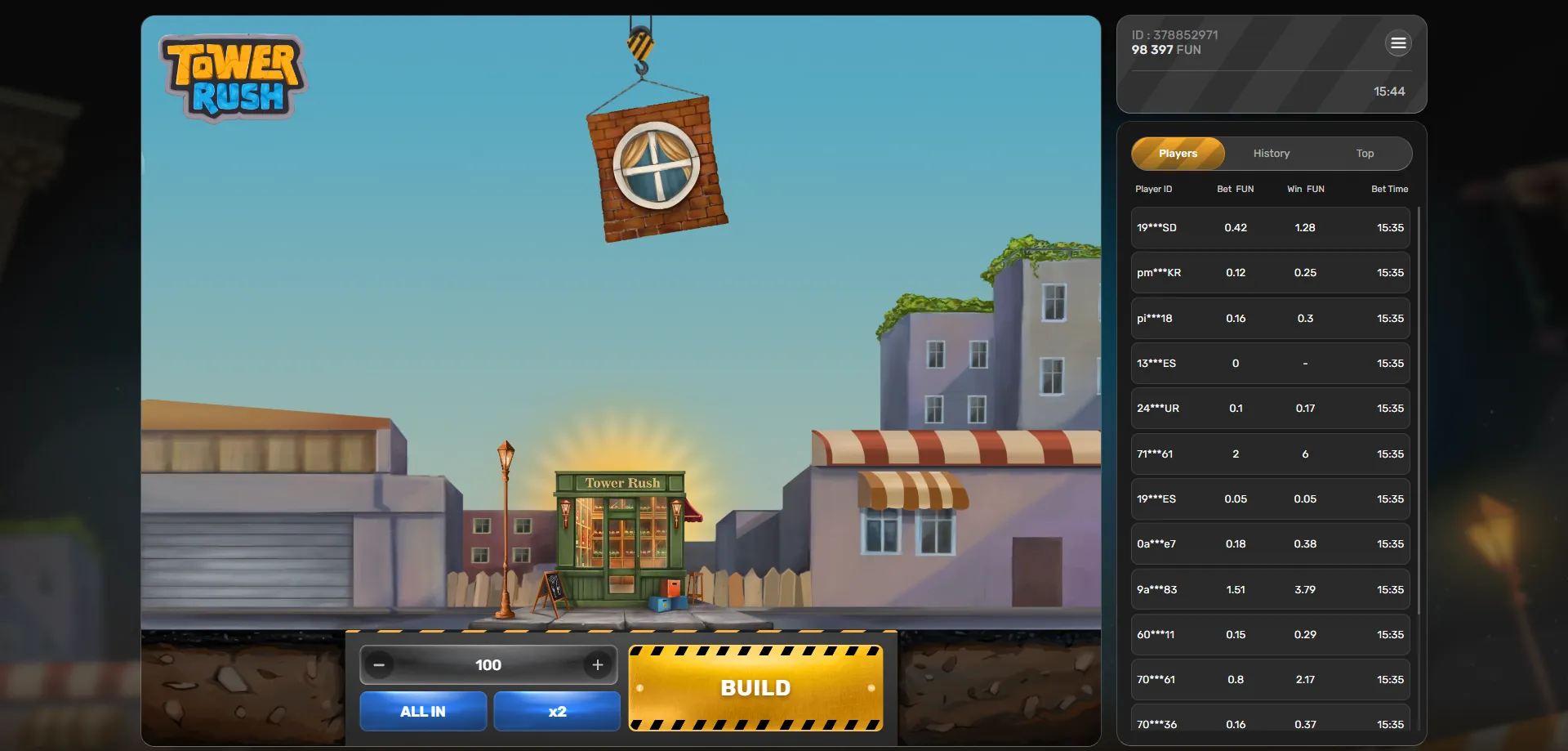
Tower Rush's ~97% RTP is one of the strongest figures in the online casino space, meaningfully higher than most slot machines that typically sit between 94% and 96%. However, RTP is a long-run statistical average, not a session guarantee. A 97% RTP does not mean you will finish any given session with 97% of your starting budget. In the short run, variance dominates. Understanding this prevents frustration and poor in-session decisions.
Shorter sessions and lower cash-out targets suit players who value consistency over excitement. Targeting multipliers in the 1.5×–2× range increases the frequency with which you successfully cash out before the crash, producing a steadier stream of smaller wins. The trade-off is that individual wins are modest — a ₹30 bet cashed out at 1.8× returns ₹54, a profit of ₹24. Over many rounds, these small profits can accumulate, but they can also be eroded quickly if a run of very early crashes occurs.
Longer sessions and higher cash-out targets suit players comfortable with frequent losses in exchange for occasional large payouts. Targeting 5×, 10×, or higher multipliers means accepting that most rounds will end before you hit your target. The auto cash-out feature is particularly valuable here: set your target multiplier in advance and let the system execute it consistently, removing the temptation to hold longer during a rising multiplier or to bail early out of nervousness.
Not every player sits down with the same goal, and your Tower Rush strategy should reflect your actual motivation. If you are playing primarily for entertainment and want extended play time, prioritise small stakes and conservative cash-out thresholds. If you are chasing a specific profit target in INR — perhaps trying to cover a deposit bonus wagering requirement — a medium-volatility approach targeting 2×–3× with tight stake discipline gives you the best balance of frequency and return. If you are a high-risk player seeking a significant multiplier hit, limit your session budget strictly and treat each round as a lottery ticket rather than a reliable income stream. There is nothing wrong with any of these approaches, as long as the one you choose is conscious and planned before you start.
Several persistent myths circulate among crash game players, and the Tower Rush community is no exception. The most damaging is the belief that the Martingale system — doubling your stake after every loss — is a reliable recovery strategy. In theory, a winning round will eventually cancel all previous losses plus yield a small profit. In practice, Tower Rush's high volatility means losing streaks of five, eight, or ten rounds are not rare. Doubling after each loss turns a ₹30 stake into ₹960 by the tenth round. If the tenth round also crashes early, the financial damage is severe, and many casino platforms impose maximum bet limits that prevent the strategy from functioning as intended anyway.
A second common myth is that recent crash history predicts future outcomes. If the tower has crashed at low multipliers for several consecutive rounds, many players assume a high multiplier is overdue. This is the gambler's fallacy. The provably fair system confirms that each round's crash point is determined independently. A low crash at round 50 has zero influence on round 51. Strategies built around reading recent history are therefore based on a false premise.
A third myth is that experienced players can visually read the tower's build animation to anticipate the crash. The animation is a visual representation of the multiplier — it does not contain information about the upcoming crash point that players can decode through observation.
Indian players face a specific practical consideration: online casino gaming sits in a legal grey area federally, with state-level regulations varying. There is no specific central law prohibiting individuals from accessing offshore licensed platforms, but players should review their own state's position before depositing real money. Playing on platforms that hold recognised offshore licences and support INR transactions via UPI or Paytm adds a layer of security compared to unlicensed alternatives.
Using the Tower Rush demo mode before risking real rupees is strongly recommended. The demo replicates the full real-money experience with virtual credits, allowing you to practise cash-out discipline, test your chosen multiplier targets, and get comfortable with the game's speed without any financial exposure. Some casinos allow demo access without registration, while others require a free account. Either way, spending time in demo mode is one of the most productive steps a new player can take.
Practical safe-play habits include setting deposit limits via your casino's responsible gambling tools, taking breaks between sessions (crash game rounds resolve in seconds and sessions can escalate quickly), and never playing under the influence of strong emotions such as frustration after a losing run or overconfidence after a winning one. Keeping a simple record of session results in INR helps maintain perspective on your actual results versus the theoretical RTP.
For a deeper understanding of how game mechanics interact with your strategy, visit the Tower Rush game guide for step-by-step instruction, and the Tower Rush RTP and Volatility page for a detailed breakdown of how the 97% return figure is calculated and what it means for session-by-session variance.
Register through cm2inch.com today to secure a matched deposit bonus and 50 free spins on the hottest slot games.
Play Now🔒 18+ · T&C Apply · Play Responsibly